HOT DATES
HOT DATES
HOT DATES
The Singapore Food Festival is back to satisfy your passion for great food. Marking its 25th edition are pop-up food events and workshops with top local chefs in a showcase of the best of Singapore’s cuisine.
The Singapore Food Festival is back to satisfy your passion for great food. Marking its 25th edition are pop-up food events and workshops with top local chefs in a showcase of the best of Singapore’s cuisine.


Follow The Footsteps That Lead To Our Independence

Every August, Singapore celebrates National Day, marking the moment the nation became independent on 9 August 1965. Beyond the parade and fireworks, the city itself holds the stories of the leaders, buildings and public spaces that witnessed Singapore’s journey from a British colony to a world class nation.
This self-guided historic trail brings visitors through some of the most significant landmarks connected to Singapore’s political history, independence movement and national identity. The route can be completed in a day and offers a meaningful way to experience the history behind modern Singapore.

1. The Istana – Where Leadership Took Root

Photo Credit: https://www.istana.gov.sg/
Start your trail at one of the most important buildings in Singapore. The Istana is located 1km away from the nearest MRT station, Dhoby Ghaut, and was built between 1867 and 1869 as the official residence of the Governor of the Straits Settlements. Originally known as Government House, it became the centre of colonial administration and ceremonial life in Singapore during British rule.
During the Japanese Occupation from 1942 to 1945, the building was used by Japanese military authorities and was reportedly occupied by senior officers, including Tomoyuki Yamashita.
When Singapore attained self-government in 1959, the estate was handed over to the Government of Singapore and renamed the Istana. Yusof Ishak became the first local head of state to take office there, making the Istana a powerful symbol of Singapore’s transition toward self-rule and eventual independence.
Location:
Orchard Road, Singapore 238823 (17min walk from Dhoby Ghaut MRT)
2. 38 Oxley Road – A Site Linked to Independence

Photo Credit: South China Morning Post
Most buildings are important for the activities held there, while some are remembered due to the people who once stepped foot within. 38 Oxley Road is historically significant as the residence of the first prime minister of Singapore, Lee Kuan Yew, from the 1940s until his death in 2015. The first meeting of the People's Action Party (PAP) occurred in the basement. Many important political discussions involving Singapore’s future were associated with this address.
On 12 December 2025, the Ministry of Culture, Community and Youth gazetted 38 Oxley Road as a national monument. While the house itself is not generally open to the public, the site remains closely connected to the story of Singapore’s independence.
Location:
Oxley Road, Singapore 238629
3. Old Hill Street Police Station – The Voice of a New Nation
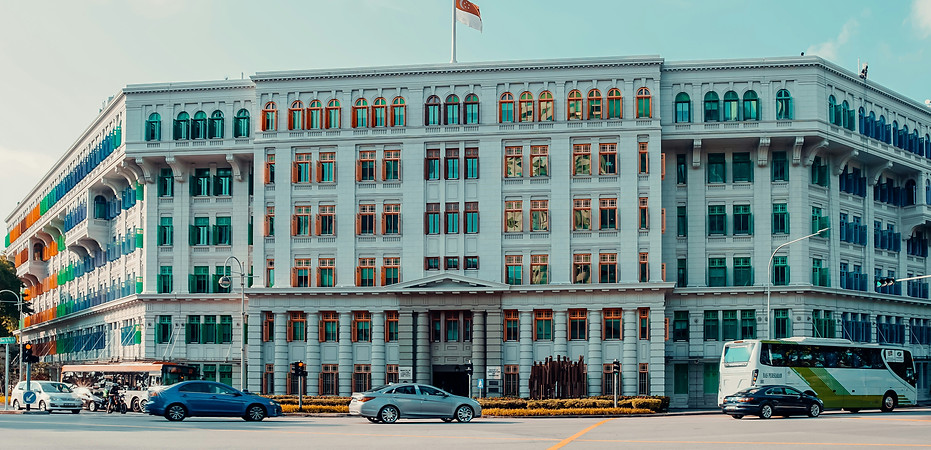
The Old Hill Street Police Station is a historic building and former police station of the Singapore Police Force located at Hill Street within the Downtown Core in the Central Area of Singapore. The name was changed from Old Hill Street Police Station to "MITA Building" in 1999, followed by "MICA Building" in 2004. After the change of ministries in November 2012, the name "MICA Building" was reverted to "Old Hill Street Police Station".
Located near the Padang, the Former Ministry of Culture Building played a key role in shaping Singapore’s national identity during the early years of independence. It was from this institution that many public campaigns, cultural programmes and nation-building messages were coordinated.
The building represents Singapore’s efforts to forge a common identity among people of different races, languages and religions.
Location:
140 Hill St, Singapore 179369 (Near Clarke Quay MRT)
4. National Library Building – Discovering the Secrets of Independence

Photo Credit: The National Library Board
Following the trail now brings you towards the Southern part of the island. The National Library traces its history back to 1823 with the establishment of the first national public library as suggested by Stamford Raffles, the founder of modern Singapore. The building is home to exhibitions and archives that preserve Singapore’s historical records.
Visitors can explore materials related to independence, including “The Albatross File: Singapore’s Independence Declassified”, which sheds light on previously classified documents and diplomatic developments surrounding Singapore’s separation from Malaysia. Compiled by Singapore's finance minister Goh Keng Swee, the file includes papers by the Cabinet of Singapore, confidential memoranda and Goh's handwritten records of his discussions with Malaysian leaders.
Location:
100 Victoria Street, Singapore 188064
5. The Padang – The Heart of National Celebrations

Photo Credit: Singapore Cricket Club
Tired of seeing only buildings? Head towards something more refreshing for the eyes. The Padang is a historic field that has witnessed many of Singapore’s defining moments, surrounded by several important landmarks, which include Saint Andrew's Cathedral, City Hall, the Old Supreme Court Building and the City Hall MRT station. Due to its prime location and historical significance, it has been used as a venue for a variety of events. It was the first host of the Singapore National Day parade (NDP), and has hosted it on a regular cycle (every three years from 1984 to 1994, every five years since) and during years that mark national milestones (such as the bicentennial of modern Singapore in 2019).
For generations of Singaporeans, the Padang has been a place where military parades, national celebrations and public gatherings reflect the country’s progress and unity. Standing here during the National Day season offers a powerful reminder of how far Singapore has come in just a few decades.
Location:
St Andrew’s Road, Singapore 179861
6. National Gallery Singapore – Art Through the Nation’s Journey

The museum is composed of a combination of the Former Supreme Court Building and City Hall, both of which are national monuments and have played significant roles in Singapore's history. National Gallery Singapore combines history and art in one landmark, overseeing Singaporean and regional art of the Eastern world, specifically of Southeast Asia, with a collection of more than 9,000 items.
These buildings witnessed some of Singapore’s most important moments, including events surrounding the end of World War II and the early years of self-government. The City Hall building also housed the office of Mr. Lee Kuan Yew, the first prime minister of Singapore. Mr. Lee and members of his Cabinet took their Oaths of Allegiance and Oaths of Office on 5 June 1959 in the City Hall Chamber.Today, the gallery showcases Southeast Asian art while preserving the historical significance of the site.
Location:
1 St Andrew’s Road, Singapore 178957
7. Old Parliament House (The Arts House) – Where Laws and Debates Shaped Singapore

Photo Credit: Arts House Group
Built in 1827, Old Parliament House is one of Singapore’s oldest government buildings. It served as the seat of the legislature for many decades and witnessed debates that helped shape modern Singapore. The building's river frontage was also where Sir Stamford Raffles was presumed to have landed on 29 January 1819.
After the Second World War, the building was reconstructed and became known as The Assembly House when Sir John Nicoll, the Governor of Singapore, used it to house the new Legislative Assembly in 1953. In 1965, it became home to the Singaporean parliament when Singapore gained independence, and it was therefore renamed the Parliament House.
Today, it operates as The Arts House and stands as a reminder that Singapore’s political journey was built through discussion, legislation and public service.
Location:
1 Old Parliament Lane, Singapore 179429 (Near City Hall MRT)
8. Merlion Park – The Symbol of Singapore

End the trail at Merlion Park, a famous Singapore landmark and a major tourist attraction located at One Fullerton, near the Central Business District (CBD). The Merlion is a mythical creature with a lion's head and a fish's tail that is widely used as a mascot and national personification of Singapore as it represents Singapore’s origins as a fishing village and its transformation into a modern city-state.
No National Day trail is complete without a stop at Merlion Park. Stand along the Singapore River and embrace the beautiful skyline while feeling the gentle spray of water from the Merlion fountain. This 8-metre tall statue has become one of the country’s most recognisable national symbols.
Location:
One Fullerton, Singapore 049213
A Meaningful National Day Journey
This trail is a journey through the places where Singapore’s story was written. From the Istana and Parliament to the National Gallery and the Padang, each stop reveals a chapter of the nation’s path to independence.
For visitors celebrating National Day in Singapore, walking this trail offers a deeper appreciation of the people, decisions and historic moments that helped build the Singapore we know today.